

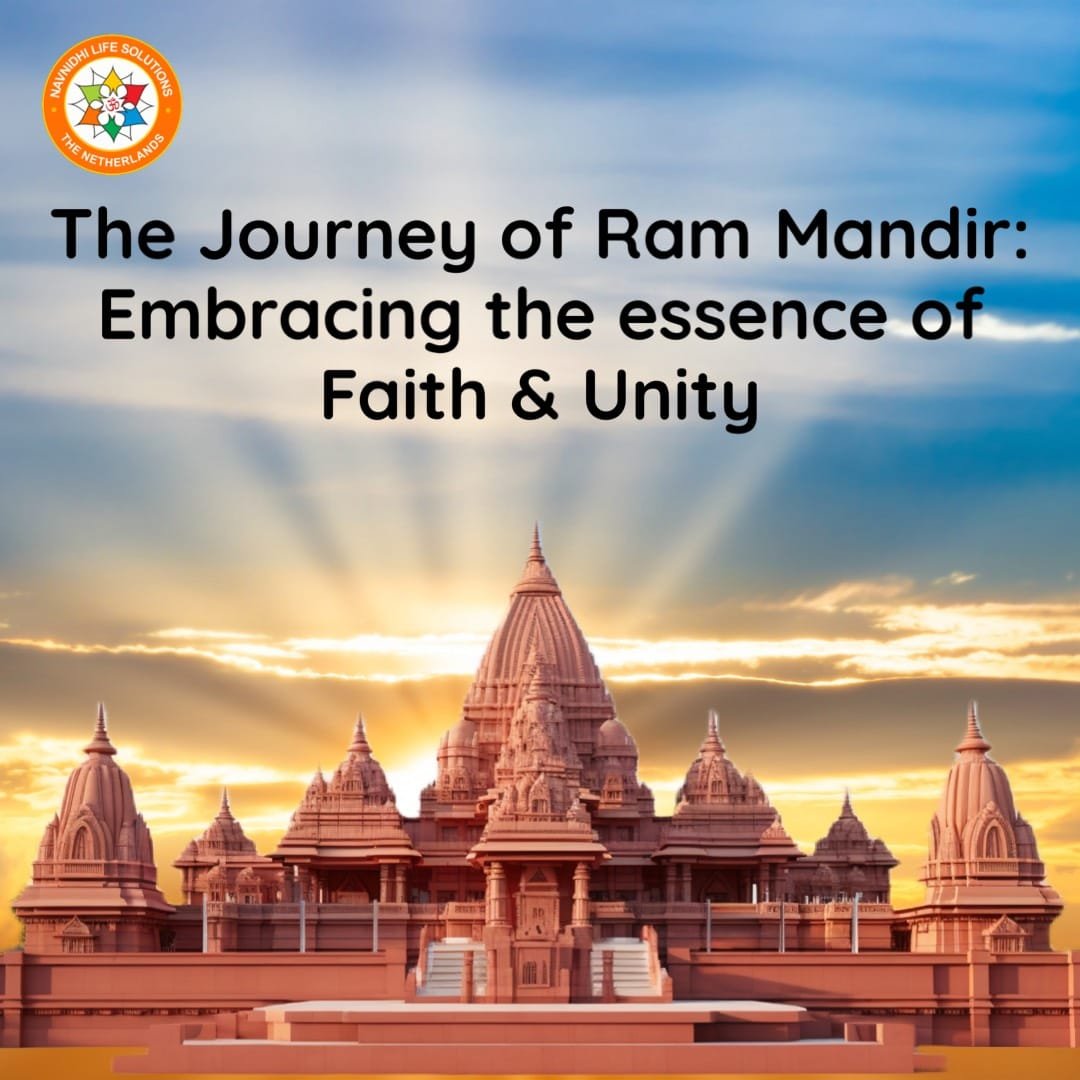
The Journey of Ram Mandir: Embracing the Essence of Faith and Unity
The magnificient Ram Mandir is built in the holy city of Ayodhya, the scared birthplace of Lord Ram. The marvellous architecture exemplifies the rich culture and spiritual essence of India. It is not just about its structural grandeur, but it reflects the true Spirit of the Nation. Also, throughout its journey, the Ram Mandir gained international recognition. The inauguration ceremony was attended by many dignitaries and celebrities from around the world. This was an important milestone since this helped in fostering good relationship between India and several nations. So, let’s learning more about the significance of the Ram Mandir.
Ram Janmabhoomi: Historical Context and Significance of Ram Mandir, Ayodhya
Ayodhya is the holy birthplace of Lord Rama – the seventh incarnation of Lord Vishnu in Treta Yug. It’s is well known as one of the major holy sites in India. Ayodhya echoes the holy stories of Lord Ram’s life as mentioned in the religious Legend – The Ramayana. For all the Hindu devotees, Ayodhya is a sacred site for Pilgrimage. The Ram Mandir built in the heart of this city is a symbol of preservation and upholding of traditional Hindu Faith.
Spiritual Significance
Devotees believe that the Ram Mandir is not just a sacred place of worship but also a holy place of pilgrimage. The construction of the Ram Mandir showcases the coming together of a long waited spiritual prognosis. It also highlights the deep faith and belief of all the endured devotees. Furthermore, it upholds the values of compassion, hope, devotion and righteousness as embodied by Lord Ram.
Ram Mandir: Symbol of Faith and Unity
The Ram Mandir is a celebration of unity among various strands of people belonging to diverse backgrounds. Transcending beyond caste, class, and religion it brings everyone together for the acknowledgement of the shared cultural legacy. Not just that, it unifies Hindus across the globe by fostering the idea of collective worship and devotion. Moreover, since people from various backgrounds were involved in the construction process, it strengthens the idea of mutual respect and inclusivity.
Ram Mandir: Journey from Dispute to Construction
The whole process of construction of the Ram Mandir was not smooth. The legal battle started in 1950 after filing 2 legal suits at Faizabad Court, Uttar Pradesh. Several legal battles later, the temple was finally decided to be constructed in 2019 on the disputed land. The demolition of Babri Masjid in 1992 had given rise to various controversies by challenging the very idea of secularism and religious diversity.
The communal battle debating over the ownership of the land finally came to an end in 2019. The land was legally given to the Hindus (after the long legal battle), allowing them to build the Raam Mandir. On the other hand, the Muslims were assigned another 5 acres of land to build Mosque. This verdict by the Supreme Court was respected by everyone in India and across the globe.
On the other hand, it also shook the core values of Religious Pluralism and amplified concerns concerning the rights and status of several minority groups. Many refer to this verdict as the victory of Hindu nationalism and a step towards building a Hindu nation.
Architectural Grandeur and the magnificent Idol of Rama
The mesmerizing Ram Mandir is a reminder of how brilliant the architecture is. It is a perfect example of the blending of the traditional and modern techniques. The temple has taken its inspiration from the Nagara Style of architecture. Besides personifying the Indian tradition, it also upholds the ideals of the contemporary. The temple has several Shikhara or spire that arise from the main ‘Garbhagriha’ or ‘Sanctum Sanctorum’. The mesmerizing idol of Ram Lalla (the child form of Lord Ram) is the divine spot where you cannot stop looking at Lord Ram. Besides that, the beautiful garden around the main temple, the serene ambience, intricate detailed work, and the spiritual aura of the Mandir is the divine worship place.
The idol of Lord Ram is referred to as Ram Lalla- the baby form of Ram which symbolises innocence that kindles a feeling of parental love for the deity. The idol is wearing a princely attire along with beautiful traditional jewellery. The exquisite pieces make him look very celestial. He is adorned with a Mukut (Crown), Kundal (Earrings), Kanth-Haar (necklace), Baajuband (Armlet), Kangan (bracelet) and Angoothi (ring) made of pure Gold and precious numerous gemstones like Diamond, Ruby, Emerald and Pearls.
Economic Thrust: Raam Mandir, Ayodhya
The significance of the construction of the Rama Mandir in Ayodhya also has several economic overtones. The building of the temple has generated several employment opportunities for local artisans, labourers and businessmen resulting in fostering economic growth and development. Surrounding the main temple area, enormous infrastructures and other hospitality facilities are helping economic growth by helping the local people by generating scopes for tourism in India.
Sustainability and Conservation in construction of Raam Mandir, Ayodhya
The most magnificent part of this beautiful structure is that it is built keeping in mind the core values of sustainability and environment friendly. Iron is not used to build the temple, instead a lot of limestone, granite and marble is. The temple complex has been seen to incorporate several eco-friendly techniques to promote sustainability.
Construction and Consecration of Ram Temple, Ayodhya
After the Bhumi Poojan on the 5th of August 2020, it marked the beginning of the construction of the Raam Mandir. On 22-January-2024, the ‘Prana Pratishtha’ or the ‘Consecration’ of Lord Ram (Rama Lalla) was performed, organised by the Shri Ram Janmabhoomi Teerth Kshetra. In conclusion the Raam Mandir project highlights the constant resilience that the devotees have had despite several conflicts and contradictions. In the socio-cultural context of India, the Raam Mandir holds a lot of significance. May this divine Mandir foster the feeling of peace, togetherness, and inclusivity among all for generations to come.