loading

Category: English blogs

  • Home
  • Category: English blogs

Astrology Consultation: See how your planets do miracle?


Benefits of Astrology Consultation


The Astrology Consultation is the session between you and your astrologer to analyse the planetary position in your horoscope. It also includes the analysis of effect of each planetary position, movements of planets betweene different house of your horoscope. It’s complete with the complete analysis, prediction of past, present & future life events, upcoming problems and their remedies to solve the issues.


Steps of Astrology Consultation


The Astrology Horoscope Consultation involves several steps, which may vary depending on the astrologer’s approach, your specific focus of the session, & the type of consultation. Let’s see an overview of how an astrology consultation session works:


Preparation for Astrology Consultation


Before the consultation, you would need to provide your birth date, time, and place. An astrologer might ask you specific questions or areas of focus you would like to address during the session. This information is essential for the astrologer to make your birth chart and prepare for the consultation.


Making the Birth Chart


Using your birth details, the astrologer will create your birth chart, which is a blueprint of the planets at the moment of your birth. This chart serves as the foundation for the consultation and provides valuable insights into your personality, strengths, challenges, and life path.


Analysis and Interpretation of your birth chart


During the consultation, the astrologer will analyze and interpret your birth chart by looking at positions of the planets, signs, houses, and aspects. An astrologer will identify key factors, patterns, and influences in your chart to offer insights into how these factors may be manifesting in your life.


Discussion and Guidance


The astrologer will discuss the planetary findings with you and offer guidance, advice, and recommendations based on the analysis of your birth chart. This include insights into your personality, relationships, career, spirituality, and other areas of life, as well as strategies for navigating challenges and maximizing opportunities.


Question and Answer


Depending on the format of the consultation, you will have the opportunity to ask questions and seek clarification on specific areas of interest. The astrologer will provide answers and insights based on their expertise and the information available in your birth chart.


Follow-Up and Integration


After the consultation, you may be provided with additional resources, recommendations, or follow-up support to help you integrate the insights gained from the session into your life. This may include suggested practices, readings, or exercises to further explore and deepen your understanding of your birth chart and astrological influences.

Overall, an astrology consultation session is a collaborative process between you and the astrologer, aimed at providing you with personalized guidance, insights, and support to help you navigate life’s challenges, unlock your true potential, and live a life aligned with the stars.

If you would like to have an astrology consultation with us to bring positive changes in your life, kindly contact us to make an appointment.

.


12 amazing life lessons from Ramayana for successful life

Life Lessons from Ramayana

The life lessons from Ramayana enlightens us at every step of our life. It also showers light on human behaviour, basic virtues of life and the constant struggle between what is good and what is bad. It was composed by sage Valmiki a long time ago but still it holds its relevance. Let’s delve into the world of spirituality and learn more about the significance of Ramayana that resonates with us all even during modern times.

1. The Virtue Of Dharma Or Righteousness

The legend of Ramayana is built on the value of Dharma or Righteousness. In various parts of the Ramayana, Lord Ram is seen to glorify the power of Dharma even when he was going through a challenging phase of personal sacrifice. This is one of the most important moral values of Ramayana that is still relevant in today’s world. In another event, Lord Rama willingly accepts exile by honouring his father’s words & promise to Mother Kaikeyi despite it was injustice towards Lord Ram. He shows immense sacrifice by choosing to perform his duty and walk on the path of Dharma. One of the most important life lessons of Ramayana is to be right by following the path of righteousness in life.

2. The Importance Of Relationships: Major Embracing Life Lessons from Ramayana

One of the very core life lessons that can be derived from Ramayana is to value relationships. The tale glorifies the essence of human connections and bonds. The conjugal bond shows the love and loyalty between Lord Ram and his wife Sita. The brotherly affection shared by Lakshman and Ram is awesome. The utmost devotion of Lord Hanuman for Lord Ram is exemplary in today’s world. It highlights the importance of mutual love and respect which are essential to weave any relationship together. Also, it points out the fact that every relationship entails within it the value of duty and responsibility. One such instance focuses on Laxman’s duty as a brother during the time of exile. He constantly devotes himself to protect his brother without even sleeping for a moment during the whole 14 years of exile.

3. The Value Of Patience And Perseverance

Lord Rama had spent his fourteen years in exile by roaming in the forest. He had to face a lot of adversities. Despite the difficulties, his patience and perseverance stand as one of the most useful philosophical teachings of Ramayana. He was truly determined to fulfill his duty even though he was put through many trials and tribulations. Another example that glorifies his virtue is during the time of his search for Sita, he has been patient throughout the process despite having to face several obstacles on the way. Patience and Perseverance is one of the most important life lessons of Ramayana.

4. The Importance Of Humility - life lessons from Ramayana

Being the incarnation of Lord Vishnu, Lord Ram still holds his modesty and humility throughout the Ramayana. He doesn’t hesitate to seek wisdom from different sages.  The humility with which he seeks advice from Lord Hanuman while he tirelessly searches for Sita, makes him a true leader. In fact, this virtue of humility in some ways also enhances Rama’s leadership qualities. Humility is one of the important life lessons that makes us the best person on this earth.

5. Selflessness And Sacrifice: vital life lessons from Ramayana

Lord Rama left the comfort of his palace and willingly opted to honor his father by accepting difficult life in exile. His selfless act and sacrifice set a beautiful example for all the followers. In order to reach something of higher purpose, one must go through a transformative journey. The life lessons of Sacrifice and selflessness in Ramayana prepares us to be strong while facing adverse situations.

6. The Virtue Of Integrity In Ramayana

An important learning from the characters of Ramayana is the value of integrity. As we proceed in this great epic, we get a glimpse of how all the characters have shown immense integrity towards oneself and others. Staying true to one’s own words, values and morals are key highlights that were noticed in all the characters especially Lord Rama and Lord Hanuman. The mighty Hanuman had been seen to faithfully fulfill all his duties towards Lord Ram with utmost integrity

7. The Quality Of Forgiveness: lessons from Ramayana

To forgive someone takes a lot of inner strength and as we delve into the Mystique world of Ramayana, we will come across the ever-forgiving nature of Lord Rama. In this epic we witness an event of the reunion of Lord Rama and his brother Bharata. In another instance, he forgives Vibhishana who was the brother & once an ally to Ravana. The prime focus here is on the act of letting go. Another life lesson is ‘Letting go‘ of one’s grudge to eventually reconcile can also help someone attain inner peace.

8. The Life Lesson Of Courage

Whether it’s Lord Hanuman, Brother Lakshman, or Lord Rama, this epic is a tale with characters exhibiting the power of being courageous. They motivate us to face any challenging situation with courage and hope. In one such occurrence, Hanuman had shown a lot of courage while taking the dangerous leap across the ocean while he was going to Lanka in Baal Kand of Ramayana.

9. Wisdom And The Importance Of Correct Judgement

Lord Ram is known for his wisdom which guides his decision-making process. It is vital for anyone to make correct judgement of any situation and in this tale, there are many instances of it. Apart from this one must also seek guidance and opinions from elders just like how Lord Rama was open to take advice from wise sages before deciding on anything. He also sought advice from Nala and Neela before building the bridge to Lanka. Such kind of strategic planning shown in this occurrence is even relevant in today’s world. The life lesson of Wisdom & the importance of correct judgement is crucial in today’s world.

10. Adaptability And Change

It is true that change is inevitable, and one cannot stop this process. When extracting life lessons from Ramayana, it is crucial to talk about how all the characters especially Goddess Sita had to embrace change and adapt to many adverse situations. Even today, this is a very important life virtue. In Ramayana, despite many trials and tribulations, all the characters promptly adapted and evolved through them, as that is the only way to move forward. Being flexible helps in growth. When Sita was kept in captivity, she had to stay resilient and adapt to the new situation. Her strength and power to stay calm throughout those dreadful times, inspires us to embrace changes and adapt accordingly.

11. The Result Of Impulsivity In Ramayana

Acting on one’s impulse without much thought can have negative effects. This can very well be understood from Ravana’s character in Ramayana. He mostly gave in to his desires, lust and impulse which resulted in his downfall. Ravana’s decision to abduct Sita was born out of his quenchless desire which ultimately caused his demise. This is an important life lessons to learn from Ramayana.

12. The Power Of Loyalty In Ramayana

Loyalty is one of the ideal life lessons from Ramayana that one will carry after reading the epic of Ramayana. Each of the characters teach us that true strength is derived by being with the loved ones through both good and bad times. Whether it’s Lord Hanuman’s loyalty towards Lord Ram, or Goddess Sita’s loyalty towards her husband Ram or vice versa, or even Laxman’s loyalty towards his brother; we  get a glimpse of how these beautiful bonds are sustained by loyalty and devotion towards one another.  The life lesson of Loyalty is an important aspect of a person’s behavior to be successful & happy.


Hence, the lessons from Ramayana on various values like righteousness, devotion, sacrifice, courage, faith etc. acts as a guiding force. These life lessons from Ramayana fosters better living being in us. As we try to move forward in life, may these virtues always inspire us to be better humans and influence our thoughts and actions.

Discovering 74 years of Ram Mandir: Unconditional Faith

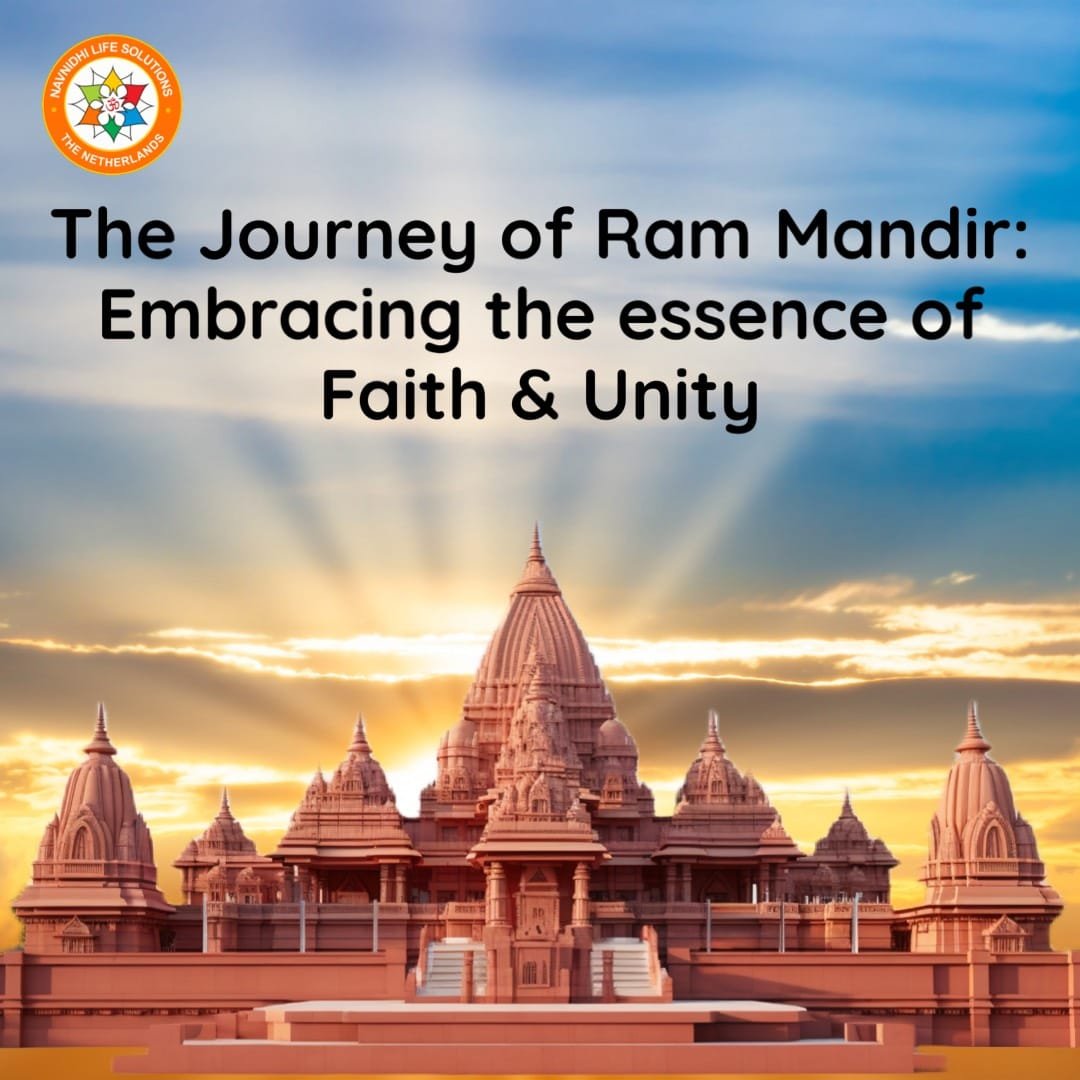
The Journey of Ram Mandir: Embracing the Essence of Faith and Unity

The magnificient Ram Mandir is built in the holy city of Ayodhya, the scared birthplace of Lord Ram. The marvellous architecture exemplifies the rich culture and spiritual essence of India. It is not just about its structural grandeur, but it reflects the true Spirit of the Nation. Also, throughout its journey, the Ram Mandir gained international recognition. The inauguration ceremony was attended by many dignitaries and celebrities from around the world. This was an important milestone since this helped in fostering good relationship between India and several nations. So, let’s learning more about the significance of the Ram Mandir.


Ram Janmabhoomi: Historical Context and Significance of Ram Mandir, Ayodhya

Ayodhya is the holy birthplace of Lord Rama – the seventh incarnation of Lord Vishnu in Treta Yug. It’s is well known as one of the major holy sites in India. Ayodhya echoes the holy stories of Lord Ram’s life as mentioned in the religious Legend – The Ramayana. For all the Hindu devotees, Ayodhya is a sacred site for Pilgrimage. The Ram Mandir built in the heart of this city is a symbol of preservation and upholding of traditional Hindu Faith.


Spiritual Significance

Devotees believe that the Ram Mandir is not just a sacred place of worship but also a holy place of pilgrimage. The construction of the Ram Mandir showcases the coming together of a long waited spiritual prognosis. It also highlights the deep faith and belief of all the endured devotees. Furthermore, it upholds the values of compassion, hope, devotion and righteousness as embodied by Lord Ram.


Ram Mandir: Symbol of Faith and Unity

The Ram Mandir is a celebration of unity among various strands of people belonging to diverse backgrounds. Transcending beyond caste, class, and religion it brings everyone together for the acknowledgement of the shared cultural legacy. Not just that, it unifies Hindus across the globe by fostering the idea of collective worship and devotion. Moreover, since people from various backgrounds were involved in the construction process, it strengthens the idea of mutual respect and inclusivity.


Ram Mandir: Journey from Dispute to Construction 

The whole process of construction of the Ram Mandir was not smooth. The legal battle started in 1950 after filing 2 legal suits at Faizabad Court, Uttar Pradesh. Several legal battles later, the temple was finally decided to be constructed in 2019 on the disputed land. The demolition of Babri Masjid in 1992 had given rise to various controversies by challenging the very idea of secularism and religious diversity.

The communal battle debating over the ownership of the land finally came to an end in 2019. The land was legally given to the Hindus (after the long legal battle), allowing them to build the Raam Mandir. On the other hand, the Muslims were assigned another 5 acres of land to build Mosque. This verdict by the Supreme Court was respected by everyone in India and across the globe.

On the other hand, it also shook the core values of Religious Pluralism and amplified concerns concerning the rights and status of several minority groups. Many refer to this verdict as the victory of Hindu nationalism and a step towards building a Hindu nation.


Architectural Grandeur and the magnificent Idol of Rama

The mesmerizing Ram Mandir is a reminder of how brilliant the architecture is. It is a perfect example of the blending of the traditional and modern techniques. The temple has taken its inspiration from the Nagara Style of architecture. Besides personifying the Indian tradition, it also upholds the ideals of the contemporary. The temple has several Shikhara or spire that arise from the main ‘Garbhagriha’ or ‘Sanctum Sanctorum’. The mesmerizing idol of Ram Lalla (the child form of Lord Ram) is the divine spot where you cannot stop looking at Lord Ram. Besides that, the beautiful garden around the main temple, the serene ambience, intricate detailed work, and the spiritual aura of the Mandir is the divine worship place.

The idol of Lord Ram is referred to as Ram Lalla- the baby form of Ram which symbolises innocence that kindles a feeling of parental love for the deity. The idol is wearing a princely attire along with beautiful traditional jewellery. The exquisite pieces make him look very celestial. He is adorned with a Mukut (Crown), Kundal (Earrings), Kanth-Haar (necklace), Baajuband (Armlet), Kangan (bracelet) and Angoothi (ring) made of pure Gold and precious numerous gemstones like Diamond, Ruby, Emerald and Pearls.


Economic Thrust: Raam Mandir, Ayodhya

The significance of the construction of the Rama Mandir in Ayodhya also has several economic overtones. The building of the temple has generated several employment opportunities for local artisans, labourers and businessmen resulting in fostering economic growth and development. Surrounding the main temple area, enormous infrastructures and other hospitality facilities are helping economic growth by helping the local people by generating scopes for tourism in India.


Sustainability and Conservation in construction of Raam Mandir, Ayodhya

The most magnificent part of this beautiful structure is that it is built keeping in mind the core values of sustainability and environment friendly. Iron is not used to build the temple, instead a lot of limestone, granite and marble is. The temple complex has been seen to incorporate several eco-friendly techniques to promote sustainability. 


Construction and Consecration of Ram Temple, Ayodhya

After the Bhumi Poojan on the 5th of August 2020, it marked the beginning of the construction of the Raam Mandir. On 22-January-2024, the ‘Prana Pratishtha’ or the ‘Consecration’ of Lord Ram (Rama Lalla) was performed, organised by the Shri Ram Janmabhoomi Teerth Kshetra. In conclusion the Raam Mandir project highlights the constant resilience that the devotees have had despite several conflicts and contradictions. In the socio-cultural context of India, the Raam Mandir holds a lot of significance.  May this divine Mandir foster the feeling of peace, togetherness, and inclusivity among all for generations to come.


Untold Truth of Medical Astrology in 2026: ultimate benefits

Untold truth of Medical Astrology in 2026

Health problem diagnosis & Medical Astrology solutions in Vedic Astrology

What is Medical Astrology?


Medical Astrology is one of the essential branch of Indian Vedic Astrology to diagnose, analyse, predict and help you in your health problems.

Did you ever notice why you are not getting relief even after taking medicine from long time? Have you ever thought that your health might be getting affected from another health issue rather than for which you are taking medicine? Do you think sometimes that your health is going worse due to a medicine you are taking for an existing ailment?

The Indian Vedic Astrology horoscope reading & prediction can help you identify your correct health issue or the upcoming health danger.

Our esteemed & 36+ years expert reseacher “Swami Keshvananda” is one of the pioneer in the field of Medical Astrology. He has analyzed more than 100,000 horoscopes to find the root cause and vedic remedies of health related problems in people.

How Medical Astrology is connected to you?


Every one has planetary effect on our lives as we all are the part of this universe. A specific set of planets plays role in our health & well-bring. Planets are moving and their movements creates ups and downs in our health & aspects of life. Planets also affect the effect of medicines, planetary compatibility with your physician, existence of illness, critical illness, recurring illness and much more.

Medicine and Astrology


  1. The medicine and astrology work together for your wellness & to solve your health problems arising due to malefic effects of planets. Even doctors believe in Supreme Power as every hospital has a prayer room. You must have heard the common sentences from hospitals after a critical surgery or treatment – “We have done our best, rest is in God’s hands”.
  2. Doctors in hospitals suggests patients (especially who are critical) to contact their priest/astrologer for health issues. Even in some European countries, hospital administration asks patients if they would like to meet an astrologer or religious preacher.
  3. In ancient India, there was the concept of ‘Ayurvedacharya’ who was an astrologer & doctor. There were also the doctor (Vaidya) but they used to consult Astrologers while prescribing medicine or treatment.
  4. The Indian Vedic Astrology can predict the following important factors from your horoscope:
    • if any medicine is giving you reaction,
    • or your liver is getting affected,
    • or your kidneys are getting affected,
    • or your heart is going to affected,
    • or you are not having proper digestion,
    • or you are having urine related problems etc.
    • or if a medicine is not giving its proper result
    • or if the illness is really in your body or not
    • or if a surgery would be beneficial for your body as per your planets & upcoming planetary positions in your horoscope
    • and much more…


For more information, check our Page Medical Astrology


Conclusion

We can help you in predicting & resolving your health issues by reading and analysing your horoscope. The main factors are planetary combinations & planetary positions in your horoscope. Planets affects you health problems, recovery problems, future health, and much more.

Medical Astrology in Vedic Astrology Horoscope chart reading helps you to solve your health problems. The Vedic remedies helps you to overcome your health problems for happy & healthy life. The important factor is that we always suggests remedies to solve your problems.

We do not create confusion and we do not scare people by telling problems. In fact, we always suggest remedies to solve your problems. Our astrology consultation is a supplementary advise/remedies in addition to your existing medical treatement. Kindly do not consider medical astrology as an alterative method for medical treatment.

Please feel free to contact us for any queries or if you would like to have your astrology horoscope consultation.

Importance of Navratri: Blessings of Maa Durga

Importance of Navratri: Blessings of Maa Durga

Navratri is one of the grandest festivals in Hindu Culture to invoke power & auspiciousness. The nine days celebration finds its significant importance in the Hindu culture. Navratri has its origin from two Sanskrit words – ‘Nav’ meaning Nine and ‘Ratri’ meaning Night. These glorious nine nights and ten days are devoted to the worship of Devi Durga who represents the divine feminine energy also known as ‘Shakti’. Navratri exemplifies victory of good over evil, light over darkness and wisdom over ignorance. Across the world, devotees immerse in the celebration by fasting, praying and performing rituals. Let’s explore the significance of Navratri more as we delve deep into the world of celebration and spirituality.

In 2025, Navratri starts on 22 September 2025 & completes on 02-October-2025.

Durga Puja in Navratri - Worshipping the Cosmic Feminine Energy

Throughout the nine days of Navratri, people devote themselves in the adoration of Devi Durga who is an embodiment to power and resilience. The celebration of Shakti is symbolic of the power that every woman has within themselves – the power to create and sustain life. Women is the source of energy & growth.

Importance of Navratri - The Victory of Good over Evil

Navratri is symbolic of the triumph of Devi Durga over the wicked demon named ‘Mahishasura’. According to the legend, Devi Durga was created by the energies of Lord Brahma, Lord Vishnu and Lord Shiva to slay Mahishasura whose unparalleled power was causing hindrance in the cosmos. After fighting for nine days, Devi Durga finally was able to vanquish Mahishasura on the tenth day. This episode is a reminder of the infinite power the Goddess holds. It inspires the devotees to consciously choose what is right and take a stand against any wrongdoings.

Navratri Celebration - across all Cultures

Navratri is celebrated across many states in India. Every state has its own rituals, customs and celebratory ceremonials that are observed during this time of the year. In Gujarat, devotees as a part of the Navratri ritual, indulge in hosting Garbas and Dandiya (different Navratri dance forms) events; where as in West Bengal it is celebrated as Durga Puja which is more than just a religious festival. That’s not all, people belonging to different social strata also participates in the celebration. Navratri hence is a celebration that fosters the essence of unity bringing together people to indulge in collective worship of the divine. It is one such festival that resonate inclusivity in Hindu festivals.

Navratri - the essence of Spiritual Renewal

Devotees are seen to engage in meditation, prayer, Navratri fasting practices and performing different ceremonial rituals throughout these nine days. They are seen to also perform our forms of spiritual practices that help in the process of seeking inner peace. Navaratri is symbolic of imbibing the positive spirit by discarding negativity.

Navaratri is a festival of love, light and spiritual purification. These glorious nine days constantly reminds us of the strength and power one has within oneself to overcome all the negativities. It encourages the devotees to embrace the essence of righteousness by practicing self-introspection through spirituality.

Navratri Legends

Nine Forms of Devi Durga

During the time of Navaratri, nine forms of Devi Durga or Navadurga are worshipped in all her glory. Here’s a guide to Navratri offering an explanation on the significance of Devi Durga and her nine forms:

Devi Shailaputri

navaratri cute Durga devi shailputri shailaputri

Goddess Shailaputri - first day of Navratri

Shailaputri is the daughter of the Mountain King Himalayas (‘Shail’ means ‘Mountain’ and ‘Putri’ means ‘daughter’). She is worshipped on the very first day of Navaratri as she is the first form of manifestation of Devi Durga. She is seen to ride a bull which is known as Nandi. Holding a Trishul (Trident) and a Lotus in both her hands, she embodies purity and strength.

In her previous birth, she was Devi ‘Sati’ – the daughter of Daksha, she offered herself in the Yagya Fire when Daksha insulted her husband Lord Shiva by not inviting him in the grand Yagya. King Himavan (or Himalaya) & his wife Devi Maina was doing severe penance of Devi Shakti seeking boon to get Devi Shakti herself as their daughter. Then, Devi was born as daughter of Himavan and got her name ‘Uma’, ‘Parvati’.

Devi BrahmaCharini

Day 2 Devi BrahmaCharini - baby cute form of Durga Navratri

Goddess Brahmacharini - second day of Navratri

The second form of Durga is Goddess Brahmacharini is worshiped on the second day of Navaratri. She holds a Rudraksh mala and water pot (Kamandala) in her hands. Her feet remain bare as she represents the time when Goddess Parvati had immerse herself in deep meditation to please Lord Shiva. She signifies devotion, loyalty, and love. In this form, she is also known as TapaCharini. She bless devotees with knowledge & wisdom. ‘Brahma’ means ‘Tapa’ and ‘Charini’ means ‘Performer’.

According to legends, the great Sage Narada reminded her about her previous life as Sati Devi. As requested by King Himavant & Devi Maina, he did the palm reading of their beloved daughter Parvati. He informed that Lord Shiva would be her husband in this life and advised her to please Lord Shiva by meditating on him. When she started penance for Lord Shiva, she took the form of BrahmaCharini.

Devi Chandraghanta

Day 3 Devi Chandraghanta - baby cute form of Durga Navratri

Goddess Chandraghanta - third day of Navratri

The third day of Navratri is dedicated to the worship of Devi Chandraghanta. Adorned by a bell shaped half-moon on her forehead, she rides a tiger. She is fierce and is an embodiment of grace and fearlessness. Riding a tiger gives golden hue to her skin that brightens the Universe. She possesses 10 hands, out of which eight hands are holding weapons and two hands are in blessing mudra. She has three eyes that makes her ultimate divine beauty. ‘Chandra’ means ‘ ‘moon’ & ‘Ghanta’ means ‘bell’. She blesses her devotees with courage, fearlessness & supreme bliss.

Devi Kushmanda

Day 4 Devi Kushmanda - baby cute form of Durga Navratri

Goddess Kushmanda - fourth day of Navratri

On the fourth auspicious day of Navratri, Goddess Kushmanda is worshipped. According to the Navratri Mythology and legends, she is the creator of the universe. And her name is derived by amalgamating three words, ‘Ku’ (little), ‘Ushma’ (warmth or energy) and ‘Anda’ (egg) - that literally translates to ‘the one who has created the universe”. She blesses her devotees with energy & vitality.

She rides the lion & has 8 hands holding weapons, jar of elixir, and her one right hand is always in AbhayMudra (blessing). She created this Universe with her divine blissful smile. She is the energy giver to Lord Sun to make him capable of creating balance in maintain life in this Universe.

Devi Skandmata

Day 5 Devi SkandMata - baby cute form of Durga Navratri

Goddess Skandmata - fifth day of Navaratri

She is worshipped on the fifth day of Navratri, and she is also referred to as Parvati, Maheshwari and Gauri. Holding little Karthik, she sits on lion, holding lotus in hands, this four armed deity symbolises knowledge and wisdom. ‘Skanda’ is the name of her elder son ‘Kartikeya’, ‘mata’ is mother, so Skandmata is the mother of Kartikeya – the chief commander of the army of Gods. Skandmata blesses the devotee with supreme ocean of knowledge.

With the grace of Devi SkandMata, the great legendry scholar Kalidas wrote two epic ‘Raghuvansha MahaKavya’ and ‘MeghDoot’.

Devi Katyayani

Day 6 Devi Katyayani - baby cute form of Durga Navratri

Goddess Katyayani - sixth day of Navaratri

She is worshipped on the sixth day of Navaratri, Goddess Katyayani is known for her fierceness and strength. Daughter of Sage Katyayan, She sits on a lion and is seen to hold a sword. She symbolises triumph over all things evil and negative.

Devi Katyayani has three eyes & four hands – one hand holds sword, two hands are in blessing posture, and one hand hold lotus.

Devi Kalratri

Day 7 Devi Kalratri - baby cute form of Durga Navratri

Goddess Kalratri - seventh day of Navratri

Goddess Kalratri is the seventh manifestation or form of Durga. As per the legends, in order to save the universe from the demons, she sacrificed her skin complexion by embracing darkness. She is known as the dark form of Durga and has a third eye on her forehead that holds the entire universe. It is believed that worship of Devi Kalratri can remove all the darkness from one’s life.

She has three round shaped bright eyes signifying universe. Her hairs are unlocked. She possesses four hands – two hands are holding weapons, one hand in blessing mudra and one hand is in fearless style. She blesses her devotees with fearlessness. She ride on the faithful donkey. She is also known as ‘Shubhamkari’, because she blesses her devotees with prosperity and auspiciousness.

Devi MahaGauri

Day 8 Devi MahaGauri - baby cute form of Durga Navratri

Goddess Mahagauri - eigth day of Navaratri

‘Maha’ means ‘great’ and ‘Gauri’ means ‘White brightening’. She blesses her devotees with enlightenment and removes the fear of death.

On the eighth day, Devi Mahagauri is worshipped. She is known for her moon like bright skin. She wears white clothing and rides bull. She is an embodiment of peace and serenity. He divine aura radiates positivity. She has three eyes & four hands – one hand is in blessing gesture, one hand is in Fear repelling gesture, one hand holds drum and other hand holds a trident.

Devi Siddhidatri

Day 9 Devi Siddhidatri - baby cute form of Durga Navratri

Goddess Siddhidatri - ninth day of Navaratri

On the ninth and the final day of Navratri, Goddess Siddhidatri is worshipped. She is a four armed deity holding a mace, discus, a book, and lotus in her hands. She has eight supernatural powers, which is also known as ‘siddhis’. These are Anima, Mahima, Garima, Laghima, Prapti, Prakambya, Ishitva and Vashitva. She represents prosperity and fulfilment. She is always anxious to help her devotees, blesses with knowledge to bring purity in life.

Which Navratri Mantra is best to do?

Amongst various mantras, hymns, and worship procedures, everyone should read the following hymns and mantras during Navratri to seek blessings of Goddess Durga:

  • Shri Durga Kavach
  • Shri Argala Stotra
  • Shri Keelak Stotra
  • MahishasurMardini Stotr
  • Beej Mantra – Om Aing Hreeng Kleeng Chaamundaay Vicchay

Worship Anushthaan during Navratri

Navratri is the best time to achieve impossible tasks as these are the 9 divine days and nights during Goddess Durga blesses the devotees with all the desires fulfilled. It’s best to take learned priests help to perform

Conclusion

Navratri constantly reminds us of the existence of the divine feminine power or energy that holds the universe together. Through these nine days of celebration, devotees pray to the goddess and seek her blessings for protection, good fortune and overall spiritual well-being. May we be filled with Goddess’s strength to overcome all the difficulties and walk on the path of enlightenment and positivity. Goddess Durga is ultimately pleased with your devotion, dedication, & your righteousness.

7 Secrets of Happy Marriage

7 Secrets of Marriage Life


Your life partner (husband or wife) is the only person who will be with you in any circumstances. Marriage is the only relationship which is based on respect, trust, dedication, devotion, loyalty, love & care.

Devotion: Both of you must be devoted to each other in terms of respect, honour, loyalty, care, love & trust. You both must respect each other as marriage is the strong bond between husband and wife. If you are devoted, you would ultimately be truthful & loyal to each other.

Devotion towards each other can surely save you from cheating in relationship. The love & respect your life partner can give you is the ultimate source of happiness. The divine relationship of marriage is the source of happiness, love, respect, prosperity.

Dedication: If you are dedicated to your partner, your relationship will always grow. It needs your willingness to provide your time and energy to strengthen your relationship. You are willing to your partner’s choices to bring happiness. Wedding is the purest relationship & it needs the same devotion that you would provide for Supreme God.

Communication: The key factor of successful relationship is strong communication. If there is any ill-though arising in your mind or heart against your partner, it’s always better to talk & solve the matter.

If you stop communicating the issue with your partner, the small seed of mis-understanding will soon grow into the tree of problems. As the problem tree grows up, the deeper its roots will spread underneath that destroys the structure of your wedding.

Friendship: If you both are best friends, you can never hide anything from each other. If anything is troubling you, your best friend can advise you, listen to you. This way you can unburden your heart and share all your feelings. But you cannot share your secrets with any of your friend, because it might create problems for you later.

And if your life partner is your best friend to share your feelings, you can never leak your secrets to outside world. And your best friend – your life partner is always with you to support you.

In Vedic Scriptures, it’s mentioned that a man’s real friend is her wife. And the woman’s greatest strength lies in her husband.

Respect: There is no relation in this world survive without respect. It’s the key ingredient of happy relationship. If you both are having an argument, don’t fight in front of anyone. Keep each other’s respect and discuss the matter later when you both are alone. Don’t put down your partner’s respect in front of anyone.

Trust: The base of your wedding is trust. It’s the responsibility of both of you to maintain the trust level of each other. An outsider might try to persuade you against your life partner, but keep your utmost trust on your partner. Talk to your partner but not in front of everyone. Maintain respect of your partner.

Transparency: Both of you should not keep any hidden secret from each other that might trouble the relationship later. Mostly, friends & family who know your secrets may plant problems for you. If your partner already know your secrets, he or she will protect you in every way. This way your relationship will become more strong.

If all the couples in this world have the feeling of dedication, devotion, friendship, respect, trust, and transparency between them, this earth will become heaven. As time moves on, you will develop the art of Telepathy & utmost understanding with your partner.

There are many situations when still your marriage relationship is not going good, then you must take help of a learned astrologer. The planets in your or your partner’s horoscope might be conflicting that only an astrologer can solve by proving Vedic remedies.

Every problem in this world has a solution using hidden secrets of Vedic Astrology. We can save your relationship!

Learn more about Kundali Matching. Contact us for Relationship Compatibility Report or Astrology Consultation.

6 incredible MahaShivratri Legends of your unconditional faith

6 incredible Legends of MahaShivratri

Let’s learn the legends of MahaShivratri that means “The Divine Night of Lord Shiva”. It is an auspicious night where devotees do fasting & worship Lord Shiva whole night together. It is marked as one of the most prominent Hindu festivals in the month of Feb or March. It is a night full of celebrations as devotees come together to prayers, fasting and connecting to the divine.

MahaShivratri 2026 is on 15 Feb 2026.

The Union of Shiva and Parvati - the first legends of MahaShivratri

According to the Shiv Purana, Mahashivratri symbolizes the divine wedding of Lord Shiva and Goddess Parvati. It is a sacred union of Lord Shiva and Devi Parvati that symbolize the victory of devotion and love. Devi Parvati is deeply devoted to Lord Shiva – she did severe penance (Tapa) to win his heart and got married to Lord Shiva. He was extremely satisfied by her unwavering dedication & accepted her as his consort.

All the dietes & universe rejoiced as they were united in a divine wedding. This divine event is celebrated as Mahashivratri. It is also called as the Divine night of devotion, the divine night of meditation, and spiritual awakening. It honors the eternal bond of Shiva and Shakti.

Shivaa
Shiva Tandav - The dancing Shiva

The Cosmic Dance of Shiva - the second legend of MahaShivratri

One of the legends also mentions about the cosmic dance of Lord Shiva on this auspicious night. The Shiva’s Tandava, this dance symbolizes the everlasting cycle of creation, conservation and demolition. Lord Shiva performed this dance to maintain the cosmic balance. He did Tandava after the demolition of demon Tripura –  signifies the triumph of good over evil.

Lord Shiva drank Poison (Halahal) - the third legend of MahaShivratri

Another enchanting tale is of the churning of ocean (Samudra Manthan) by the Gods and Demons to get the elixir of immortality (Amrit). During such occurrence, ‘Halahala’ – the deathly poison emerged. Its emergence was threatening as it was slowly engulfing the whole universe in darkness.

At this crucial time, Lord Shiva drank the poison to save the universe. He kpet this poison in his neck. That’s why he is also adorned with the title of “Neelkantha” as his neck turned blue due to poison. Mahashivratri celebrates the transition from darkness to light and honors Shiva as the savior of the universe.

Lord Shiva drinking Poison during Ocean Churning
Rudraksha Shivling on Mahashivratri by Maharshi Keshvananda

The emergence of ShivLing - fourth legends of MahaShivratri

The Shiva Linga has extreme importance in Hinduism. The Linga (Shiva Lingam) signifies the limitless power and aura of Lord Shiva. It transcends into an infinite power beyond any form (formless or Nirakaara). It’s vast, shapeless and infinite.

According to the ancient scriptures, once Lord Vishnu and Lord Brahma had a conflict over supremacy, then Lord Shiva appeared in between them as a formless ray of light (known as Jyotirlinga). Shiva instructed them both to find the source and the end of that beam of light. He also promised to declare the winner whoever will find the origin or end of that light.  Lord Brahma took the form of a swan & flew upwards. On the other hand, Lord Vishnu turned himself into a boar and tried looking for the other end by going downwards. After relentless search, Lord Brahma lied & declared to have found the end of light with flower Ketki as the proof.  Later, he repented & punished for his lie. Finally, they both realised that Lord SHiva himself is infinite & all pervading.

Shiva Linga is considered as a source of infinite power. It was the first time on the 14th day of the Phalgun month that Lord Shiva exhibited himself in the form of the Linga. From then, this day is celebrated as Mahashivratri as it is considered to be very auspicious.

Arrival of Ganga on Lord Shiva's head - fifth legends of MahaShivratri

The great King Sagar (ancestor of Lord Ram) performed the AshwamedhaYajna for 99 times sucessfully. He sent his horse to take another round of the earth so that he could complete his 100th round of sacrifice. Lord Indra, the king of God, was jealous of his success and he notoriously captured the sacrificial horse. Lord Indra also hide this horse  in the hermitage of Kapila Muni. The ministers of Kind Sagar sent 60,000 princes from Ayodhya to look for the horse. After searching for long time, they found the horse in Kapila Muni’s hermitage and they mistook him as a thief. Displeased by such behavior, Kapila Muni burnt them into ashes.

Hearing about this, one of the grandchildren of King Sagar, Bhagirath begged Kapila Muni for a solution. To which he said that only the waters of Ganga could bring back them to life. King Bhagirath kept meditating after leaving his kingdom for more than 1000 years. Pleased by Bhagirath’s devotion, Devi Ganga agreed to come on earth. But the earth was not capable of sustaining the pressure of heavy streamflow of Ganga River, She requested Bhagirath that only Lord Shiva can sustain her in his hairlocks and then she can calmly descends on earth.

So, King Bhagirath meticulously started praying to Lord Shiva to sustain River Ganga in his hairs before she descends to earth. Lord Shiva instantly laid down his hair so that Ganga could flow through it. That is how the holy waters of the river washed away the ashes of those 60,000 princes and released them from the curse so that they could go to the heavens. On this day of MahaShivratri, devotees offers ceremonial bathing of the Shiva Linga. Devotees also take a holy deep in the waters of Ganga as it is considered as one of the attributes of Lord Shiva.

Ganga Descending on earth

Shiva's assurance and the new moon

Lord Shiva and Parvati on Kailash

One of the legends explains the conversation between Lord Shiva and Goddess Parvati. When Goddess Parvati asked Lord Shiva about his favorite day, Lord Shiva joyously replied saying that he likes it when it’s the full moon night. This happens to be on the 14th day of the Phalgun month. From that day onwards, all the devotees indulge in celebrating the Mahashivratri.

Lord Shiva loves Bel Patra, Bhasma & Rudraksha. He specifies the use of ‘Bel’ leaves for his worship. To him, the leaves of Bel is more precious than any jewels in the world. Furthermore, Lord Shiva explains the correct way to worship him which includes the process of using milk, curd, clarified butter and honey to bathe him. The ritual should continue till the next morning and the devotee must feed the Brahmins in the morning and then break his fast. His words spread through Goddess Parvati and since then people around the world are seen to celebrate his glory by fasting, performing the ceremonial bath and also by offering a lot of Bel leaves.

Conclusion

Mahashivratri is not just a festival but a celebration of power of Shiva who gave his all to save the world. It encapsulates within it the essence of harmony and victory. May we be inspired to fill our lives with goodness, positivity and calm. Let’s embrace oneness and keep the spirit of Mahashivratri alive by following the path of spiritual awakening.

5 incredible ways to stay happy in your life

Happiness is precious. Happiness is essential for healthy, peaceful, positive, & successful life. Staying happy is your true asset and achievement. Here are few habits to incorporate in your everyday life to attain happiness.

  • Forgiveness: The meaning of ‘forgiveness’ changes depending on the fact that if the person seeking forgiveness really wants it or not. One situation is the forgiveness seeker is Guilty of a wrong past deed. Second situation is the forgiveness seeker is not feeling Sorry by heart, it’s just an excuse to escape from the situation. In either case, you should grant forgiveness because it will bring happiness to you and your heart will feel relaxed. The same concept applies to you if you are seeking forgiveness. If you are not sincere, it will hurt you because you’re not lying to the other person, in fact you are lying to yourself.
  • Acceptance: The meaning of Acceptance is to face the situation the way it is with a stable mindset. This way you would be able to find solution. You must try to accept the situation without attempting to change the situation, protest that situation, or exit from that situation.
  • Compassion: The word Compassion is a human emotion prompted by the pain of others. More vigorous than empathy, this feeling commonly gives rise to an active desire to alleviate another’s suffering. It is often, though not inevitably, the key component in what manifests in the social context as altruism. Be compassionate towards others.
  • Trust: The base of everything in this world is Trust. It means being able to predict what other people will do and what situations will occur. If we can surround ourselves with people we trust, then we can create a safe present and a better future. Be trustworthy, never break anyone’s trust.
  • Unconditional Love: Let’s understand this with an example. I love you as you are, as you seek to find your own special way to relate to the world, or the way you feel that is right for you. It is important that you are the person you want to be and not someone that I or others think you should be.

Why Indian brides apply Henna on hands ?

Scientific reasons of applying Henna on hands

Why Indian Brides apply henna on hands?

All the Indian Hindu weddings are incomplete without Henna (mehendi) for bride and groom. Henna increases the beauty of the brides & groom. The fascinating designs & mehndi themes create an environment of love for bride & groom for each other. Finding each other’s name & initials is one of the loving rituals after wedding. The mesmerizing designs & henna artwork is simply awesome. Our old traditions also says the deep darkness of a bride’s henna shows her bond with her mother-in-law & some traditions also says the deep darkness shows the bond between bride & groom.

why indian brides apply henna

But have you ever tried to find out scientific reason behind this beautiful ritual? Let’s read more to find the scientific reason behind henna application on hands & feet.

The scientific reason behind applying henna is that the Henna is a medicinal herb (Lawsonia inermis). The festivals and weddings are often too stressful that sometimes causes fever and headaches. Especially, the bride & groom are the most that need to de-stress during wedding as they do get tired in numerous rituals (that are long & strenuous).
When Henna is applied on hands and feets, it cools down the body temperature and lowers the stress level. And henna acts as a relaxing element for them at the time of ritual filled high energy wedding.

Also, as per the Botany studies of this plant says that Lawsonia inermis (Henna) is antifungal, antibacterial, anticancer, antidiabetic, antiviral, antiparasitic, anti-inflammatory properties.

Did you know amazing health benefit of wearing Toe ring?

Did you know amazing health benefit of wearing Toe-ring?

Why to wear toe-ring?

You would have seen many Asian women wearing toe-ring made of silver. It is one of the Hindu religious ritual in India for married women. Let’s read the strong scientific reason behind wearing the toe ring.

The nerve of second toe connects the uterus and heart, which strengthen the uterus. Wearing toe ring on second toe regulates the blood flow to uterus, keeps uterus healthy, and regularise the menstrual cycle, that increases the chances of conception.

  • The nerve of second toe connects the uterus and heart, which strengthen the uterus. Wearing toe ring on second toe regulates the blood flow to uterus, keeps uterus healthy, and regularise the menstrual cycle, that increases the chances of conception.
  • Silver Toe ring absorbs polar energies from earth and passes through the body (in Uterus). Un-married girls wears toe ring to ease the menstrual pain (usually in third toe). It also removes negative energy from the body.
  • Toe ring (Bichiya) is an important symbol of married women.

Culture & Rituals

Cultural reasons & benefits of wearing Toe ring
  • We read scientific reason behind wearing toe ring, we should not ignore the cultural reason.
  • Gold is sacred like Goddess Lakshmi. Wearing Gold below the stomach is disrespect to Goddess Lakshmi. Gold toe rings are not allowed.
  • Toe ring is an integral part of Solah Shringar. Toe ring is very important for married women to wear on both feet.
  • Silver Toe-rings add beauty to the feet of married women.
  • Many people do not want to follow the tradition & culture. We have to understand that it is essential to follow these scientifically proven traditions. We must teach our kids about the traditions. A big thanks to the women to follow the culture and rituals globally.

Shocking details about Abortion

Mis-carriage cases has increased a lot as per the research data available on Internet:

” Spontaneous abortion in the first trimester is common. 15–20% of the clinically recognised pregnancies are affected. Approximately 80% of all cases of pregnancy loss occur within the first three months of pregnancy (first trimester). According to March of Dimes, nearly 50% of all pregnancies end in spontaneous abortion “

15–20% of the clinically recognised pregnancies are affected. Approximately 80% of all cases of pregnancy loss occur within the first three months of pregnancy (first trimester). According to March of Dimes, nearly 50% of all pregnancies end in spontaneous abortion “

Wearing silver toe-ring might save you from mis-carriage upto a large extent.

Are you also facing problems related to conceiving baby or to continue your pregnancy? Your horoscope have solution to all your problems related to relationships & children. Contact us to book your appointment.

Subscribe to our YouTube channel.